Find a stop on the map
The Imperial Palace loop in Tokyo for runners
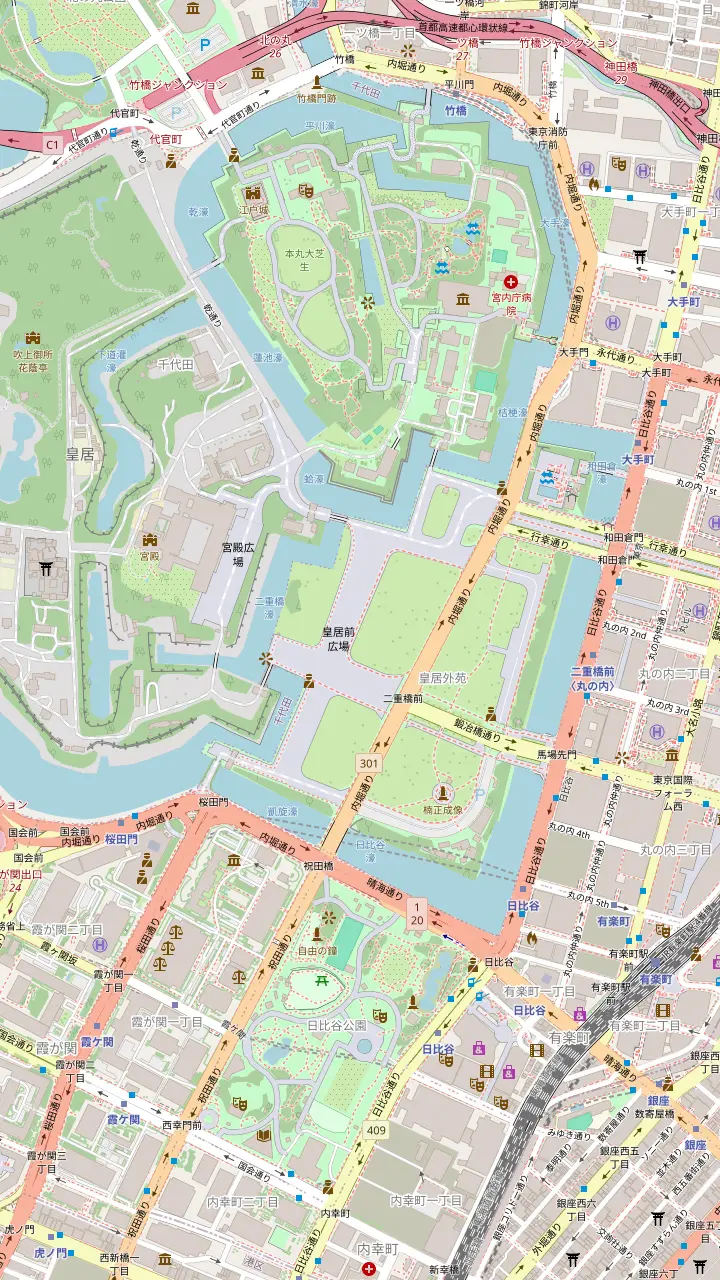
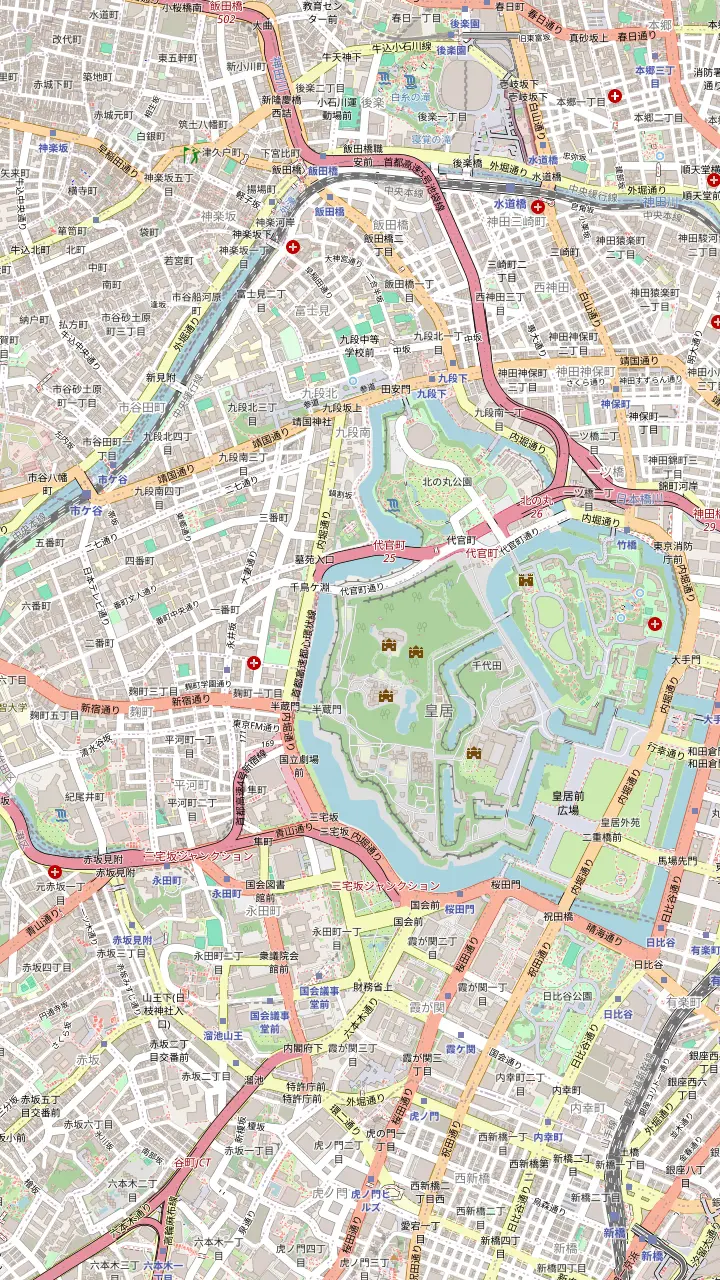
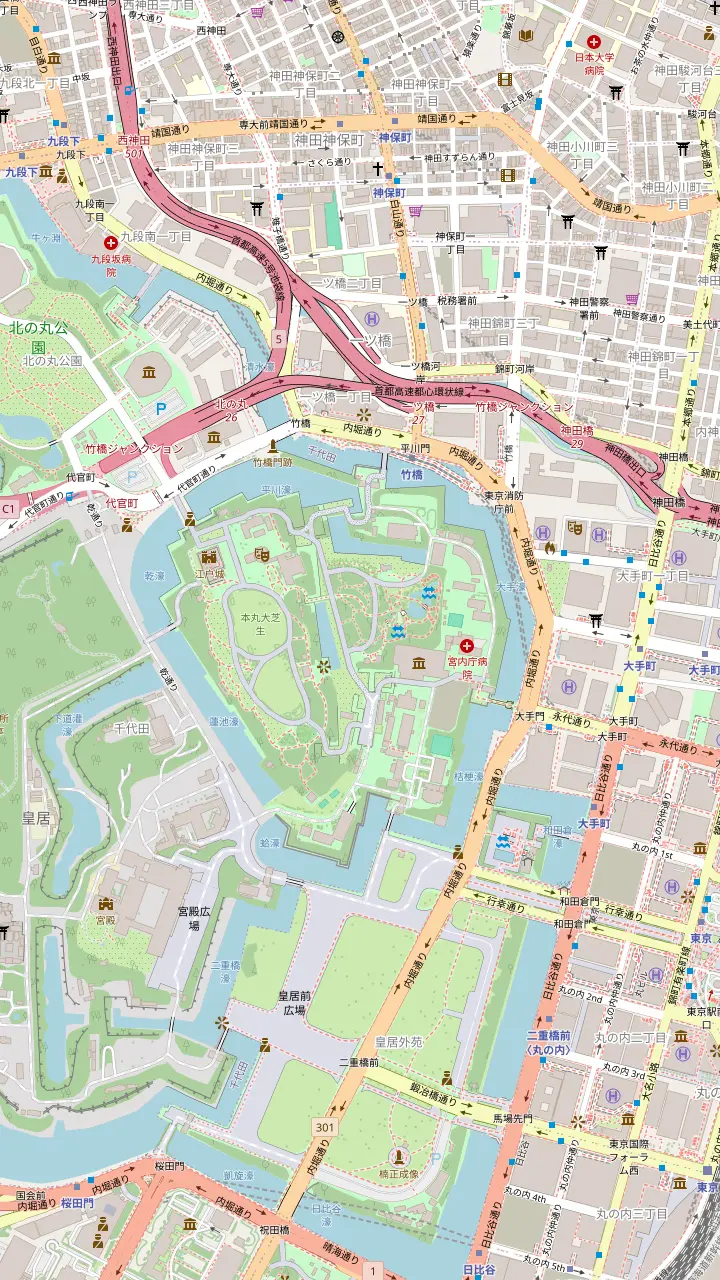
Map of 21 stops
The gardens, the plaza and the loop, pin by pin
Pick a route and tap a pin or a stop: you get its note and a Google Maps link.
Completed around 1620, the largest remaining gate of Edo Castle.
Google MapsOfficially, Nijubashi means the iron bridge only, not the two bridges together.
Google MapsThe bronze statue was presented to the Imperial Household Agency in 1900.
Google MapsThe backdrop for photos taken from the glass bridge in Wadakura Fountain Park.
Google MapsBuilt in 1961 to mark the wedding of the Heisei Emperor Emeritus.
Google MapsA 2-minute walk from exits 2 and 6 to Kokyo Gaien.
Google Maps
Home to one of the runner stations with rental lockers and showers.
Google MapsAbout 140 cherry trees line the 700-meter walkway.
Google MapsA 5-minute walk from exit 2 to the moat.
Google MapsA 5-minute walk from exit 1a to Hirakawa-mon.
Google MapsA 2-minute walk to the Nijubashi on the plaza side.
Google MapsRunner station with lockers and showers at this stop.
Google MapsA runner station stands beside this station.
Google MapsThe 1964 Olympic arena for martial arts, in Kitanomaru.
Google Maps
The old main gate of Edo Castle and the usual way into the East Gardens.
Google MapsEntrance to the Sannomaru Shozokan is free.
Google MapsOne of the numbered points on the agency's East Gardens map.
Google MapsThe stone base of the castle tower is 11 meters high.
Google MapsA three-storied keep 16 meters tall, in the south of the ruins.
Google MapsA 5-minute walk from Takebashi Station, exit 1a.
Google MapsThe third public gate of the East Gardens.
Google Maps
Map © OpenStreetMap contributors
The moat road around the palace is Tokyo's best-known running circuit. The distance, the direction, the runner stations with lockers and showers, and the official rules for groups are all in this guide.
Editorial team, tokyoimperialpalace.top · Updated November 6, 2026 · ~6 min read
Overview
- DistanceGO TOKYO describes a fairly easy, flat 5.3 km with no cars or traffic lights.1
- DirectionRun counter-clockwise and keep to the left.2
- Changing and showersThree runner stations offer rental lockers, refreshments and showers for a fee.3,4
- Quiet timeThe route is generally less crowded in the early morning.5
- GroupsGroup use by 20 or more people needs approval from the Kokyo Gaien office.6
What the loop is
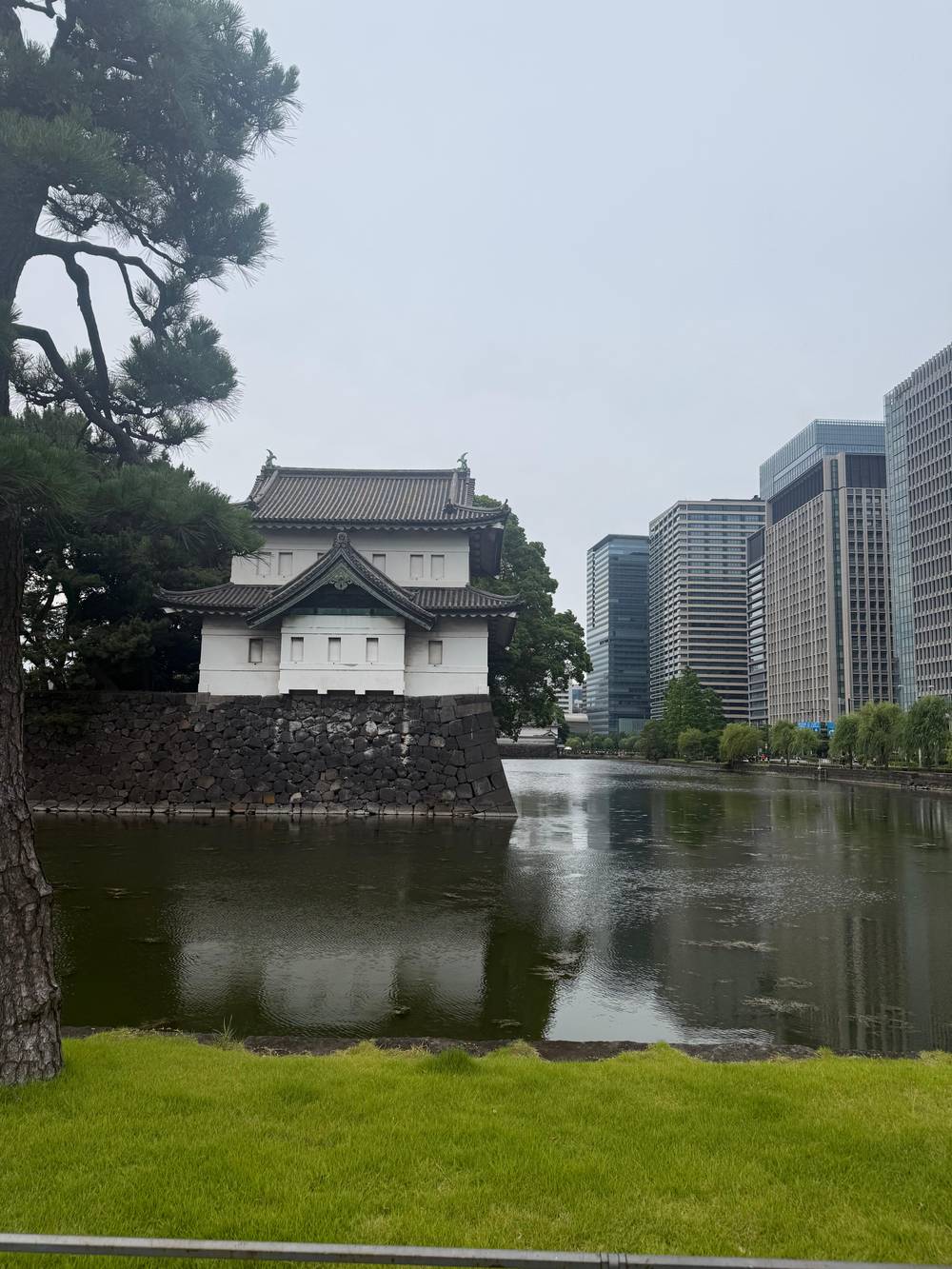
Running around the palace is a ritual for many Tokyo office workers. GO TOKYO describes a fairly easy 5.3 km flat run with no cars or traffic lights, taking in the outskirts of the Imperial Palace.1 The loop circles the moat, so it passes gates, stone walls and watchtowers that belong to old Edo Castle. For a visitor the run doubles as a first tour: you will see the grounds from the outside before you walk through the East Gardens on another day.
The park authority puts the wider area in context. The grounds are a little over a square kilometer, with a plaza, 12 moats and Kitanomaru Garden.7,8 The loop is a path along the outside of that.
A short distance suits a first visit, and it fits easily into a morning before sightseeing, with time left to shower, eat and still reach the museums when they open. On a 5.3 km loop you can plan a fast circuit or a slow circuit with photographs, and the flat surface suits runners of any level.1
Where to change
The three runner stations
| Station | Named by GO TOKYO | Facilities | Notes |
|---|---|---|---|
| Kojimachi | Runners Station next to the station3 | Lockers, refreshments, showers4 | For a fee |
| Hanzomon | Joglis3 | Lockers, refreshments, showers4 | For a fee |
| Nagatacho | Adidas Runbase3 | Lockers, refreshments, showers4 | For a fee |
From an older GO TOKYO guide; confirm hours and prices with each station.3
Which way to run
Direction matters here, and it is a rule rather than a habit. Newcomers sometimes assume runners may choose, but the path works only because everyone follows the same pattern. GO TOKYO says to start at any point, run counter-clockwise and keep to the left.2 The Ministry of the Environment states the same local rule: when circling along the inner moat, go counterclockwise.9 This is described as a rule agreed locally, and it is repeated on the official page for the garden.
The same rule explains the overtaking etiquette. In narrow places runners should not overtake forcibly, and when passing, they should check the surroundings and in principle go on the right side.10 A short call of sumimasen, excuse me, before overtaking is the polite way to do it.11
A fixed direction keeps the flow smooth on busy evenings. If you run against it you will meet a stream of runners head-on, and your pace will suffer for it. Pick your lane early, hold your line through the corners and give a wide berth to walkers and photographers who stop without warning.
Where to change, store bags and shower
You do not need to arrive in running kit. GO TOKYO names Runners Station next to Kojimachi Station, Joglis at Hanzomon Station and Adidas Runbase at Nagatacho Station as places to rest and change.3 All have rental lockers, refreshments and showers for a fee.4
The same guide notes that the route has runner stations with showers, refreshments and maps.16 There are also drinking fountains and clean bathrooms along the route.17
Those details come from an older GO TOKYO guide, so confirm prices and opening hours with each station before you rely on them. Station lockers elsewhere remain the fallback for a bag, and a hotel front desk can usually hold luggage if you prefer to run light. Choose a station by where you are staying: the three sit on different sides of the loop, so the nearest one saves a long warm-up walk.
Your run
How do you want to run the loop?
Rows for the kind of runner you are today
If I want a fast flat circuit
Run in the early morning
If I am visiting and have no kit
Use a runner station
Lockers and showers are offered for a fee.4
If I am running with a big group
Ask for permission
Groups of over 20 need permission.15
If I want something longer
Try the Sumida stretch
It is a 9 km stretch from Asakusa to Tsukishima.14
When to run
The guide says the loop is generally less crowded in the early morning.5 Many locals go running after work,36 which tends to make the evening the busy period. Pick your hour with that in mind, and keep your pace honest when the path fills up.
Season matters too. Tokyo is hot and humid in summer and dry in winter, so stay hydrated.34 Spring and autumn are the pleasant seasons, and GO TOKYO adds that the course is especially pretty then. In summer, an early start or a late one after sunset is far kinder than midday, and a cap and a small bottle make a real difference.
In cherry blossom weeks the moat paths are a favorite place to walk, and the Japan National Tourism Organization advises going early in the day to avoid the crowds.37 See the cherry blossom page for the details, and allow a slower pace if you run that week.
A run morning
From locker to shower
Rules for the garden
The park is a national garden, and its rules apply to runners as well. Smoking, including e-cigarettes, is prohibited,35 and sports other than jogging and marathons are prohibited along with play equipment.38
The park authority also asks for permission before group runs. Permission is required for jogging or marathons in groups of over 20 people.15 The Japanese guidance adds that group use by 20 or more people, unless a stroll rather than sport, needs approval from the Kokyo Gaien office.6
For ordinary runners, none of that applies. Run as an individual or in a small group and you can start whenever you like, as long as you keep to the direction and the etiquette. Keep headphones low enough to hear a bell or a call from behind, and step aside before you stop for a photograph.
Video
Best Tokyo running route: Japan's Imperial Palace
Sota Maehara RUNNING on YouTube · Your tap on play is what loads the video.
Start at any point, run counter-clockwise and keep to the left.
Before you lace up
Run checklist
Running events and big groups
Organised runs follow a published procedure. For group runs the start is limited to 100 people at a time, with at least 5 minutes between starts.39 Running on the gravel plaza is prohibited for group use.40
These limits shape what you see on weekends. A large run is released in small waves, which keeps the path from clogging, and an informal group of friends should stay below the threshold. Running clubs often agree on a meeting point away from the plaza so that the entrance stays clear.
If you plan an event, contact the Kokyo Gaien office as early as the rules require. For the rest of us, the lesson is simply to keep a casual run small and to treat the path as a shared space.
How the palace loop compares
GO TOKYO lists other courses in the same guide. Komazawa Olympic Park has a tree-shaded 2.1 km course,13 and Meiji Jingu Gaien has a 1.5 km path looping around the park.12
Many people run the 9 km stretch along the Sumida River from Asakusa to Tsukishima.14 The palace loop is the one that gives you history in every bend, with the moat on one side and gates on the other. A slow lap with a camera is a perfectly good way to use it, and nobody on the path will mind.
Pair the run with a walk, a coffee and a slow look at the stonework you ran past. After a shower at a runner station, the East Gardens are free to enter and a short walk away.41 The Viator walking tour behind this site starts from $13. Runners share the path with walkers, so keep to the outer edge and pass with care.
FAQ
Common questions, answered fast.
How long is the Imperial Palace run?
GO TOKYO describes it as a fairly easy, flat run.1
Which direction do I run?
Keep to the left.2
Where can I shower?
Joglis at Hanzomon and Adidas Runbase at Nagatacho are among them.3
Are there lockers?
The runner stations have rental lockers.4
Is there drinking water?
There are drinking fountains along the route.17
When is it quiet?
It is generally less crowded then.5
Can I smoke?
Smoking, including e-cigarettes, is prohibited.35
Can a group of 20 run?
Groups of over 20 need permission.15
Sources
- Tokyo Convention & Visitors Bureau (GO TOKYO) · Running Course Guide for Runners ↩
- Tokyo Convention & Visitors Bureau (GO TOKYO) · Running Course Guide for Runners ↩
- Tokyo Convention & Visitors Bureau (GO TOKYO) · Running Course Guide for Runners ↩
- Tokyo Convention & Visitors Bureau (GO TOKYO) · Running Course Guide for Runners ↩
- Tokyo Convention & Visitors Bureau (GO TOKYO) · Running Course Guide for Runners ↩
- Ministry of the Environment (Kokyo Gaien National Garden) · Running (marathon) use of Kokyo Gaien (Japanese page) ↩
- Ministry of the Environment (Kokyo Gaien National Garden) · Kokyo Gaien National Garden ↩
- Ministry of the Environment (Kokyo Gaien National Garden) · Kokyo Gaien National Garden ↩
- Ministry of the Environment (Kokyo Gaien National Garden) · Running (marathon) use of Kokyo Gaien (Japanese page) ↩
- Ministry of the Environment (Kokyo Gaien National Garden) · Running (marathon) use of Kokyo Gaien (Japanese page) ↩
- Tokyo Convention & Visitors Bureau (GO TOKYO) · Running Course Guide for Runners ↩
- Tokyo Convention & Visitors Bureau (GO TOKYO) · Running Course Guide for Runners ↩
- Tokyo Convention & Visitors Bureau (GO TOKYO) · Running Course Guide for Runners ↩
- Tokyo Convention & Visitors Bureau (GO TOKYO) · Running Course Guide for Runners ↩
- Ministry of the Environment (Kokyo Gaien National Garden) · Kokyo Gaien National Garden ↩
- Tokyo Convention & Visitors Bureau (GO TOKYO) · Running Course Guide for Runners ↩
- Tokyo Convention & Visitors Bureau (GO TOKYO) · Running Course Guide for Runners ↩
- Chiyoda City Tourism Association · The East Gardens of the Imperial Palace
- Chiyoda City Tourism Association · The East Gardens of the Imperial Palace
- Imperial Household Agency · The East Gardens of the Imperial Palace in Tokyo
- Chiyoda City Tourism Association · The East Gardens of the Imperial Palace
- Chiyoda City Tourism Association · The East Gardens of the Imperial Palace
- Chiyoda City Tourism Association · The East Gardens of the Imperial Palace
- Imperial Household Agency · The East Gardens of the Imperial Palace in Tokyo
- Ministry of the Environment (Kokyo Gaien National Garden) · Sakuradamon Gate
- Ministry of the Environment (Kokyo Gaien National Garden) · The Main Gate and the Nijubashi Double Bridge
- Ministry of the Environment (Kokyo Gaien National Garden) · Statue of Kusunoki Masashige
- Ministry of the Environment (Kokyo Gaien National Garden) · Wadakura Fountain Park
- Ministry of the Environment (Kokyo Gaien National Garden) · Wadakura Fountain Park
- Chiyoda City Tourism Association · Kokyo Gaien National Garden
- Ministry of the Environment (Kokyo Gaien National Garden) · Chidorigafuchi Moat
- Tokyo Convention & Visitors Bureau (GO TOKYO) · Chidori-ga-fuchi Moat
- Chiyoda City Tourism Association · Nijubashi Bridge
- Tokyo Convention & Visitors Bureau (GO TOKYO) · Running Course Guide for Runners ↩
- Ministry of the Environment (Kokyo Gaien National Garden) · Kokyo Gaien National Garden ↩
- Tokyo Convention & Visitors Bureau (GO TOKYO) · Running Course Guide for Runners ↩
- Japan National Tourism Organization · Imperial Palace & Tokyo Station ↩
- Ministry of the Environment (Kokyo Gaien National Garden) · Kokyo Gaien National Garden ↩
- Ministry of the Environment (Kokyo Gaien National Garden) · Running (marathon) use of Kokyo Gaien (Japanese page) ↩
- Ministry of the Environment (Kokyo Gaien National Garden) · Running (marathon) use of Kokyo Gaien (Japanese page) ↩
- Imperial Household Agency · The East Gardens of the Imperial Palace in Tokyo ↩
More to read