Find a stop on the map
Edo Castle in Tokyo, and what is left of it
The quick take
Edo Castle in Tokyo was founded in 1457, lost its main keep to fire in 1657, and survives as moats, gates, watchtowers and stone walls around the Imperial Palace.
Dates and survivors
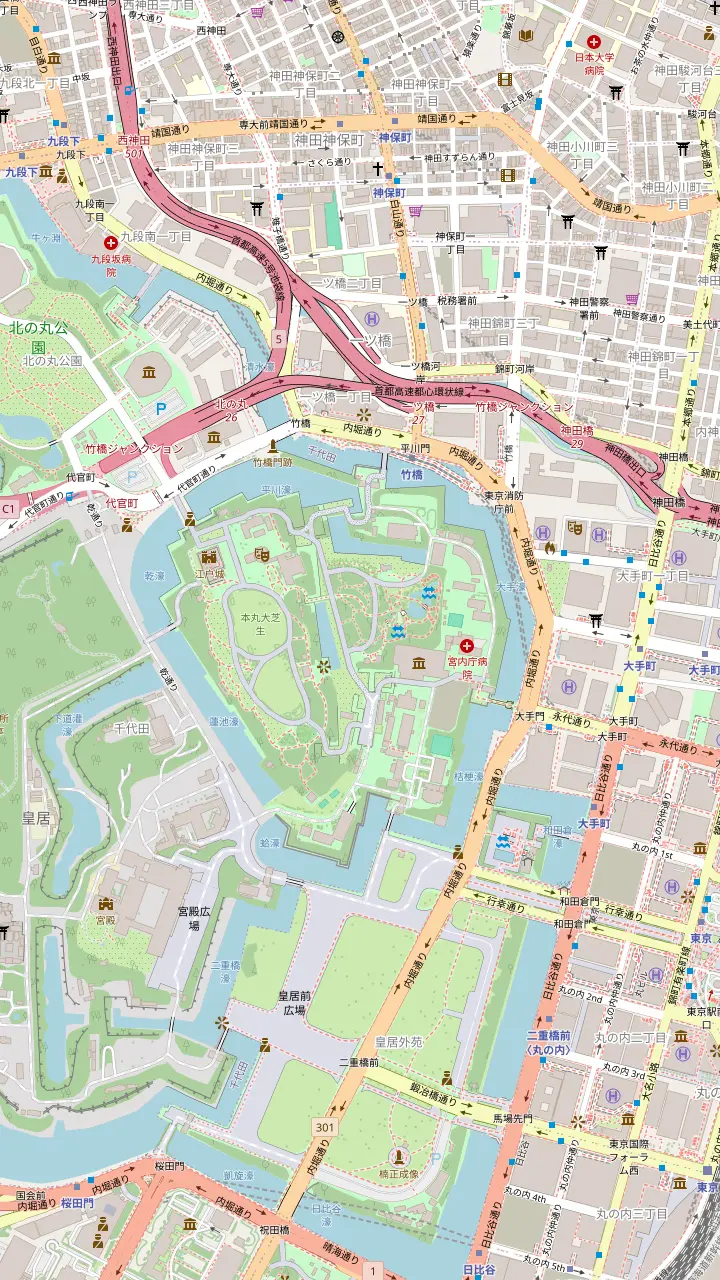
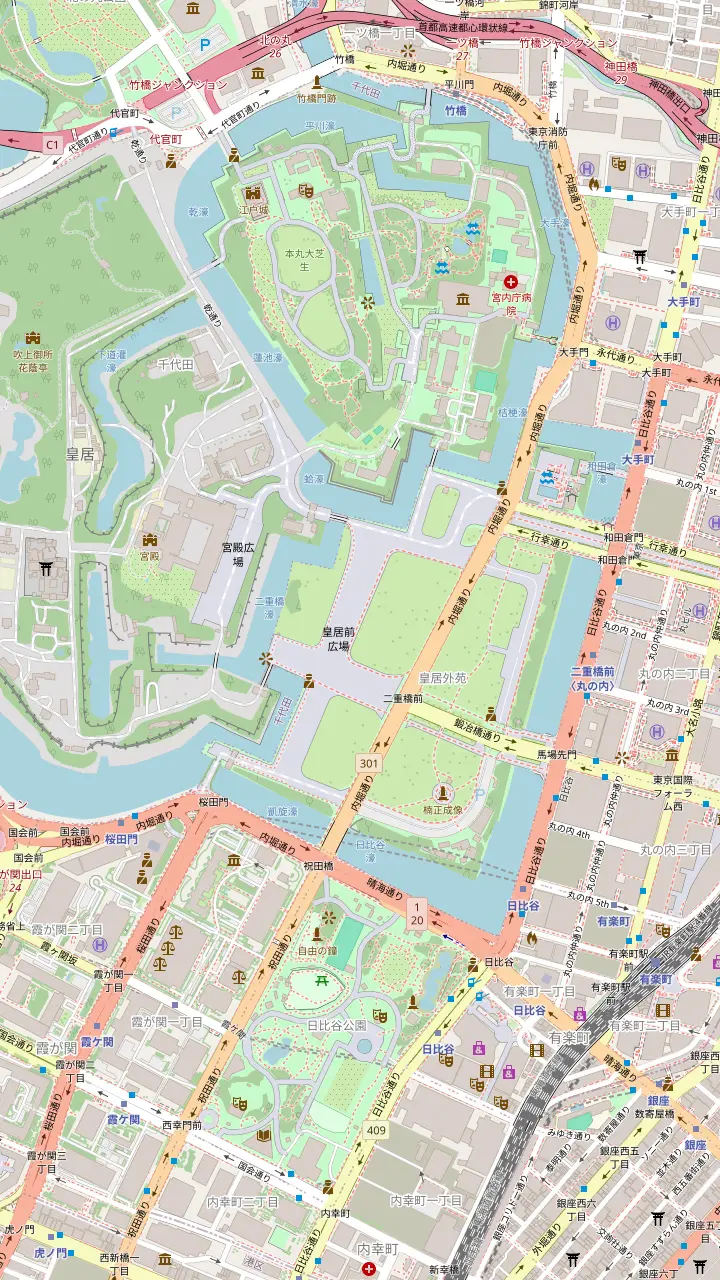
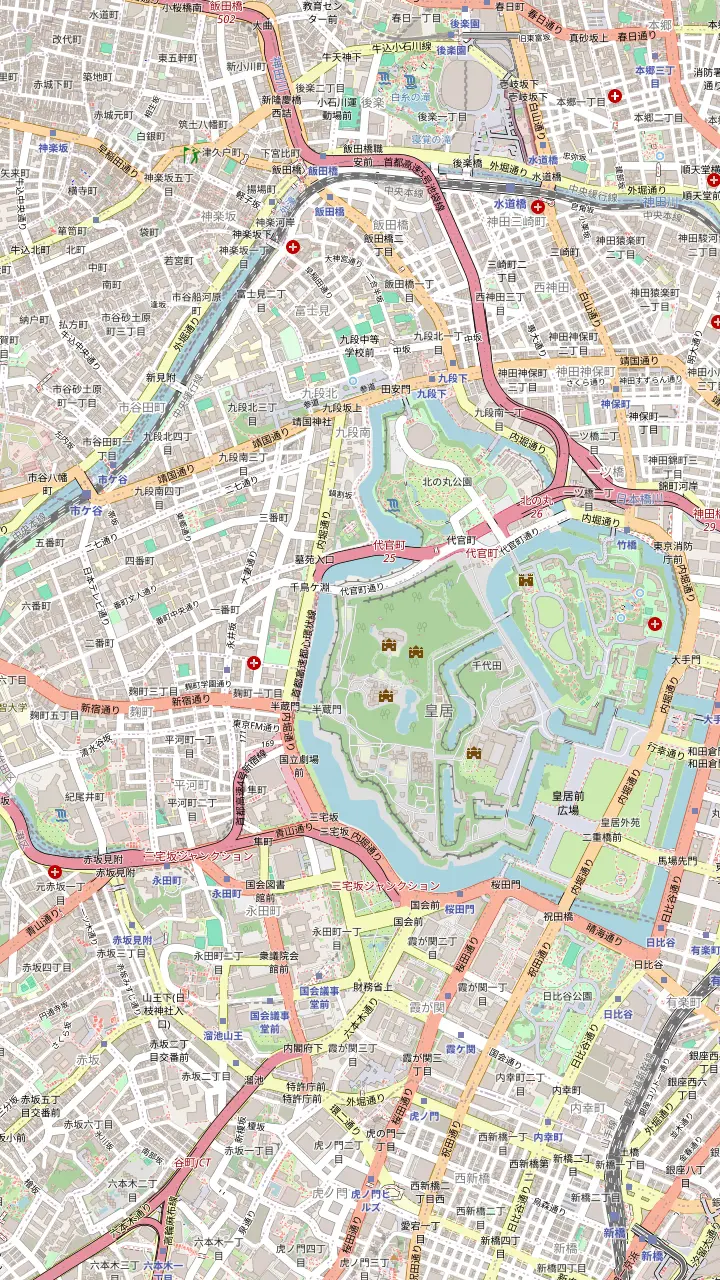
Map of 21 stops
The gardens, the plaza and the loop, pin by pin
Pick a route and tap a pin or a stop: you get its note and a Google Maps link.
The old main gate of Edo Castle and the usual way into the East Gardens.
Google MapsEntrance to the Sannomaru Shozokan is free.
Google MapsOne of the numbered points on the agency's East Gardens map.
Google MapsThe stone base of the castle tower is 11 meters high.
Google MapsA three-storied keep 16 meters tall, in the south of the ruins.
Google MapsA 5-minute walk from Takebashi Station, exit 1a.
Google MapsThe third public gate of the East Gardens.
Google Maps
Completed around 1620, the largest remaining gate of Edo Castle.
Google MapsOfficially, Nijubashi means the iron bridge only, not the two bridges together.
Google MapsThe bronze statue was presented to the Imperial Household Agency in 1900.
Google MapsThe backdrop for photos taken from the glass bridge in Wadakura Fountain Park.
Google MapsBuilt in 1961 to mark the wedding of the Heisei Emperor Emeritus.
Google MapsA 2-minute walk from exits 2 and 6 to Kokyo Gaien.
Google Maps
Home to one of the runner stations with rental lockers and showers.
Google MapsAbout 140 cherry trees line the 700-meter walkway.
Google MapsA 5-minute walk from exit 2 to the moat.
Google MapsA 5-minute walk from exit 1a to Hirakawa-mon.
Google MapsA 2-minute walk to the Nijubashi on the plaza side.
Google MapsRunner station with lockers and showers at this stop.
Google MapsA runner station stands beside this station.
Google MapsThe 1964 Olympic arena for martial arts, in Kitanomaru.
Google Maps
Map © OpenStreetMap contributors
The castle in Tokyo is not a rebuilt museum piece but a buried one. This guide follows the fortress from its founding to the fire that took its keep, and shows which walls, gates and towers you can still stand beside.
Editorial team, tokyoimperialpalace.top · Updated November 6, 2026 · ~6 min read
Overview
- FoundedA castle has stood on the site since 1457.1
- Tokugawa homeFrom 1590 it was the home of Tokugawa Ieyasu, first shogun in 1603.2
- Lost keepThe original tower was destroyed by fire in 1657.3
- PalaceThe Imperial Palace has occupied the site since 1868.4
- Still standingMoats, gates, bridges, watchtowers and stone walls remain.5
A castle that began in 1457
Edo Castle is older than the city that grew around it. A castle has stood on this site since 1457, when the samurai Ota Dokan built one on the ground now called the Honmaru, Ninomaru and Sannomaru.1 The Ministry of the Environment adds that it was built in a time of conflict and political upheaval.
Its position was not an accident. The natural moat at Chidorigafuchi played a role in the decision to build here.6
For most visitors the first castle is a small piece of the story. What you see today dates from the Tokugawa rebuilding, and the best way to read the grounds is as a layering of eras: a modest fort, then the largest fortress of the shogunate, then an imperial residence. That layering is why a short stroll can feel like crossing several centuries.
What to look at
Surviving pieces of the castle
| Piece | Where | What it tells you | Date |
|---|---|---|---|
| Sakuradamon | Plaza side | Largest remaining gate15 | Around 162015 |
| Tayasu-mon | Kitanomaru | Oldest surviving gate16 | 163616 |
| Tenshudai | East Gardens | Base of the lost keep14 | Tower lost 16573 |
| Fujimi-yagura | East Gardens | Keep that served as a substitute17 | After 165717 |
| Ote-mon | East Gardens | Old main gate18 | Edo period |
Pieces and dates as given by the Ministry of the Environment and the Chiyoda City Tourism Association.5
The Tokugawa years, and the biggest castle in Japan
From 1590 the castle was the home of Tokugawa Ieyasu, who became the first Tokugawa shogun in 1603.2 That date changed everything. Ieyasu's family held power until the end of feudal rule, and Edo Castle was the seat of that government.
His successors kept building. The second and third shoguns, Hidetada and Iemitsu, extended the castle, with the work completed by 1660.9 The shogunate's expansion made it the largest such stronghold ever built in Japan.10
Even the ground was remade. Engineers of the age treated the shoreline as raw material. The plaza now in front of the palace was once an inlet of Edo Bay, filled in during 1593 to make room for the enormous castle complex.7 Around it lay the Nishi no Marushita, home to the mansions of powerful daimyo lords and shogunate officials.11
1657: the fire that took the keep
The tallest building of the castle did not last. The original tower was destroyed by fire in 1657.3 Its stone base, the Tenshudai, still stands in the East Gardens, and the tower it supported is said to have been 51 meters high, the tallest in the country.12
A second keep never followed. The Chiyoda City Tourism Association says the tower was not rebuilt because its style was considered outdated, and effort went to restoring the castle's land instead.21 The decision is a quiet piece of history: the shogunate chose to repair the city before it replaced a symbol. Visitors who expect a rebuilt white tower are often surprised, since nothing like it ever returned to the skyline.
In its place another building took on the role. The Fujimi-yagura came to serve as a substitute after the great fire of 1657.17 In 1882 a meteorological observatory was even set up on the keep base,22 a sign that the ruin had found a second life as a useful platform.
Choose your angle
How do you want to meet Edo Castle?
Each row is a different way into the old fortress
If I want to climb something
Visit the keep base
The Tenshudai is open to climb for the view.19
If I want the great gate and a story
Go to Sakuradamon
It is the largest remaining gate, built around 1620.15
If I want a free visit
Walk the East Gardens
Admission is free.20
If I want it explained
Join a guided walk
The Viator tour lasts 2 hours.
If I want the oldest gate
Seek out Tayasu-mon
It dates to 1636.16
The gates and towers you can still visit
Several structures survived the fires and the modern rebuilding. The Ministry of the Environment lists moats, gates, bridges, watchtowers and stone walls that remain, many designated Special Historic Sites and Important Cultural Properties.5 The grounds today include a plaza, 12 moats and Kitanomaru Garden.41
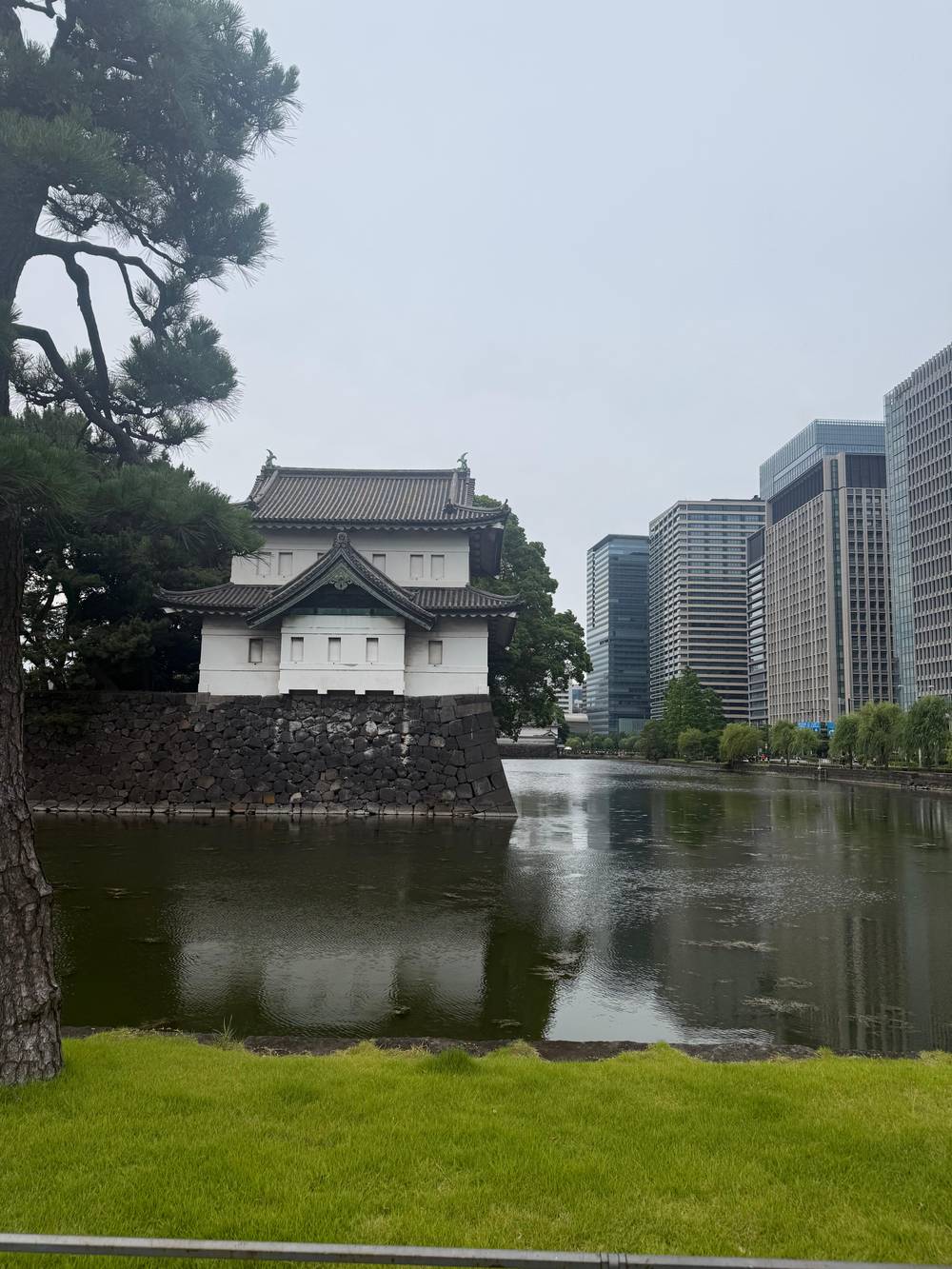
Sakuradamon, completed around 1620, is the largest remaining gate of the castle.15 It is a square-shaped masugata defense gate,42 its high stone walls are built without mortar,43 and the huge stones mostly came from the Izu Peninsula, about 100 kilometers away, by boat.44
The Tayasu-mon in Kitanomaru has a record of a gate on its spot back to an earlier date and took its present design in 1636, which makes it the oldest of the surviving gates.16 Ote-mon, the old main gate, is now the usual entrance to the East Gardens.18 The Fujimi-yagura is a three-storied keep 16 meters tall.13
Five centuries on one site
From fort to palace
1457
First castle
The samurai Ota Dokan builds on the Honmaru, Ninomaru and Sannomaru.1
1590
Ieyasu arrives
The castle becomes the home of Tokugawa Ieyasu.2
1593
Inlet filled
The plaza area is reclaimed to expand the complex.7
1603
First shogun
Ieyasu takes the title of shogun.2
1657
Keep burns
The original tower is destroyed by fire.3
1868
Palace
The imperial court takes over the site.4
1968
New palace
The current palace buildings are completed.8
A famous gate and a famous murder
Sakuradamon has another claim on memory. In 1860 the feudal lord Ii Naosuke was assassinated at the gate by ronin samurai.45 The event is known as the Sakuradamon Incident and is one of the stories a guide will tell you as you pass the stones.
A great earthquake also left a mark on the gate. Only the huge force of the Great Kanto Earthquake in 1923 shook some of the gate's stones loose, and repairs have since strengthened it.46 The wall has held up through a lot.
Standing before the gate, you can read the defense in the layout: the gate turns an intruder at a right angle inside a walled square, where archers and soldiers above would have had a clear shot.42 That is the kind of detail that the empty lawns cannot show you without a name and a story, which is the strongest argument for walking with someone who knows the ground. Even on your own, pause at the corner and look up at the angle of the wall.
Video
Edo Castle to Tokyo's Imperial Palace: samurai power and hidden history
digital Japan guide on YouTube · Your tap on play is what loads the video.
expanded the castle making it the largest such stronghold ever built in Japan
Plan the castle day
What to carry to the old castle
From castle to palace
Feudal rule ended and the castle passed to the new government. The Emperor moved from Kyoto to Tokyo in 1869, after living in Kyoto for over a millennium.47 The Imperial Palace has occupied the site since 1868.4
Fire kept doing its work. Most of the original castle buildings have been lost to fire,48 and a fire in 1873 burned most of the castle to the ground.49 The current palace buildings were completed in 1968 in the Nishinomaru, the former palace of the retired shoguns.8
Postwar changes opened other parts of the old castle to everyone. Kitanomaru, once occupied by the Imperial Guard from 1874 to 1945,50 became a public park, and the East Gardens have been open to the public since 1968.51
Seeing the castle today
The easiest place to start is the East Gardens, which are free to enter. The keep base, the Fujimi-yagura, the guardhouses and a restoration miniature of the castle all sit within them.20,52 Ote-mon is a 5-minute walk from Otemachi Station.53
If you want the details explained, a guided walk helps. The Viator tour behind this site lasts 2 hours, takes a group of up to 15 and starts from $13, with its listing naming stone gates, remnants of castle walls and the keep foundation. A GetYourGuide private tour of the East Gardens and Edo Castle starts from $63 for a 2-hour private group tour; the listing does not say whether that is per person or per group.
Whatever you pick, keep the shape of the story in mind: a castle from 1457, a vast Tokugawa stronghold, a keep lost in 1657, and a palace on the same ground from 1868.1,3,4 Each stone you pass belongs to one of those chapters, and the quiet lawns are the clearest sign of how much has vanished. Walking the line of the old walls makes the scale of the shogun's castle easier to picture than any plan.
FAQ
Common questions, answered fast.
When was Edo Castle built?
A castle was built on the site by Ota Dokan in 1457.1
Why did the keep never return?
The tourism association says effort went to restoring the castle's land instead.21
Is Edo Castle still standing?
Moats, gates, bridges, watchtowers and stone walls remain.5
Can I climb the keep base?
The Tenshudai is open to climb for the view.19
What is the oldest gate?
It took its present design in 1636.16
Who lived at Edo Castle?
It was the home of Tokugawa Ieyasu from 1590.2
When did the Emperor arrive?
He moved from Kyoto to Tokyo that year.47
Sources
- Ministry of the Environment (Kokyo Gaien National Garden) · Former Edo Castle ↩
- Ministry of the Environment (Kokyo Gaien National Garden) · Former Edo Castle ↩
- Chiyoda City Tourism Association · Tenshudai ↩
- Ministry of the Environment (Kokyo Gaien National Garden) · Former Edo Castle ↩
- Ministry of the Environment (Kokyo Gaien National Garden) · Kokyo Gaien National Garden ↩
- Ministry of the Environment (Kokyo Gaien National Garden) · Chidorigafuchi Moat ↩
- Ministry of the Environment (Kokyo Gaien National Garden) · Japanese Black Pine Trees ↩
- Ministry of the Environment (Kokyo Gaien National Garden) · Former Edo Castle ↩
- Ministry of the Environment (Kokyo Gaien National Garden) · Former Edo Castle ↩
- Ministry of the Environment (Kokyo Gaien National Garden) · Kokyo Gaien National Garden ↩
- Chiyoda City Tourism Association · Kokyo Gaien National Garden ↩
- Chiyoda City Tourism Association · The East Gardens of the Imperial Palace ↩
- Chiyoda City Tourism Association · The East Gardens of the Imperial Palace ↩
- Chiyoda City Tourism Association · The East Gardens of the Imperial Palace ↩
- Ministry of the Environment (Kokyo Gaien National Garden) · Sakuradamon Gate ↩
- Ministry of the Environment (Kokyo Gaien National Garden) · Kitanomaru Garden ↩
- Chiyoda City Tourism Association · The East Gardens of the Imperial Palace ↩
- Chiyoda City Tourism Association · The East Gardens of the Imperial Palace ↩
- Chiyoda City Tourism Association · The East Gardens of the Imperial Palace ↩
- Imperial Household Agency · The East Gardens of the Imperial Palace in Tokyo ↩
- Chiyoda City Tourism Association · Tenshudai ↩
- Chiyoda City Tourism Association · Tenshudai ↩
- Chiyoda City Tourism Association · The East Gardens of the Imperial Palace ↩
- Imperial Household Agency · The East Gardens of the Imperial Palace in Tokyo
- Chiyoda City Tourism Association · The East Gardens of the Imperial Palace
- Imperial Household Agency · The East Gardens of the Imperial Palace in Tokyo
- Ministry of the Environment (Kokyo Gaien National Garden) · The Main Gate and the Nijubashi Double Bridge
- Ministry of the Environment (Kokyo Gaien National Garden) · Statue of Kusunoki Masashige
- Ministry of the Environment (Kokyo Gaien National Garden) · Wadakura Fountain Park
- Ministry of the Environment (Kokyo Gaien National Garden) · Wadakura Fountain Park
- Chiyoda City Tourism Association · Kokyo Gaien National Garden
- Tokyo Convention & Visitors Bureau (GO TOKYO) · Running Course Guide for Runners
- Ministry of the Environment (Kokyo Gaien National Garden) · Chidorigafuchi Moat
- Tokyo Convention & Visitors Bureau (GO TOKYO) · Chidori-ga-fuchi Moat
- Chiyoda City Tourism Association · Nijubashi Bridge
- Ministry of the Environment (Kokyo Gaien National Garden) · Running (marathon) use of Kokyo Gaien (Japanese page)
- Imperial Household Agency · The East Gardens of the Imperial Palace in Tokyo ↩
- Imperial Household Agency · The East Gardens of the Imperial Palace in Tokyo ↩
- Imperial Household Agency · The East Gardens of the Imperial Palace in Tokyo ↩
- Imperial Household Agency · The East Gardens of the Imperial Palace in Tokyo ↩
- Ministry of the Environment (Kokyo Gaien National Garden) · Kokyo Gaien National Garden ↩
- Ministry of the Environment (Kokyo Gaien National Garden) · Sakuradamon Gate ↩
- Ministry of the Environment (Kokyo Gaien National Garden) · Sakuradamon Gate ↩
- Ministry of the Environment (Kokyo Gaien National Garden) · Sakuradamon Gate ↩
- Ministry of the Environment (Kokyo Gaien National Garden) · Sakuradamon Gate ↩
- Ministry of the Environment (Kokyo Gaien National Garden) · Sakuradamon Gate ↩
- Ministry of the Environment (Kokyo Gaien National Garden) · Former Edo Castle ↩
- Ministry of the Environment (Kokyo Gaien National Garden) · Former Edo Castle ↩
- Ministry of the Environment (Kokyo Gaien National Garden) · Kokyo Gaien National Garden ↩
- Ministry of the Environment (Kokyo Gaien National Garden) · Kokyo Gaien National Garden ↩
- Imperial Household Agency · The East Gardens of the Imperial Palace in Tokyo ↩
- Chiyoda City Tourism Association · The East Gardens of the Imperial Palace ↩
- Chiyoda City Tourism Association · The East Gardens of the Imperial Palace ↩
More to read