Estimate your group cost
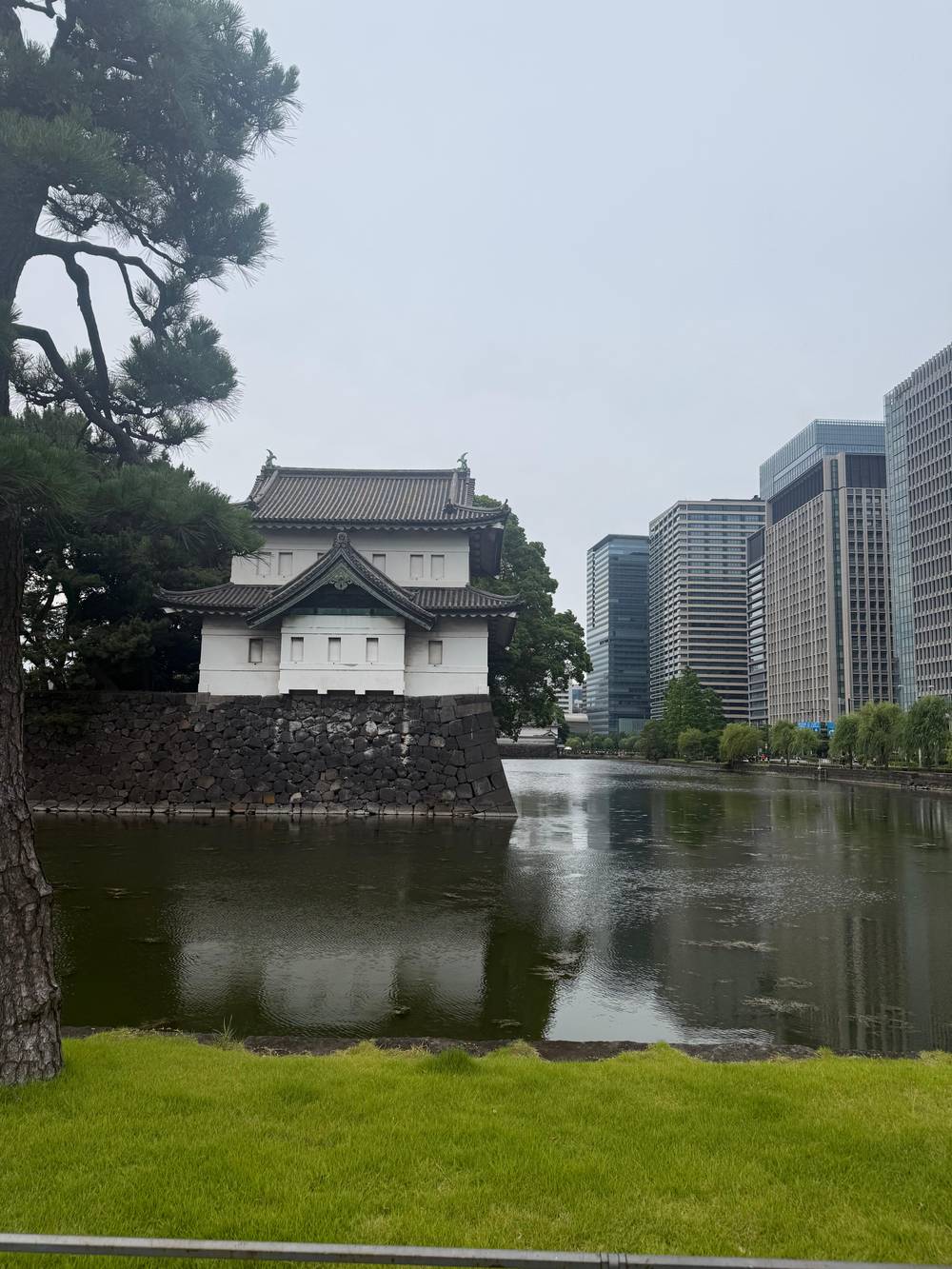
Things to do near the Tokyo Imperial Palace
Compare all 3 options
What a guided walk costs for your group
Add your party and see what each of three walks would cost
- Shogun walking tour2 hours, small group · per individual from $13
≈
View - East Gardens walk2.5 hours · per individual from $20
≈
View - Private tour2 hours, private · from $63 up
≈
View
From-prices on GetYourGuide, shown at the ECB reference rate. Your exact price is confirmed during booking.
The palace sits in the middle of a walkable district. Museums, an Olympic arena, old gates, department stores and Ginza all lie within a stroll, and this page strings them into a single day.
Editorial team, tokyoimperialpalace.top · Updated November 6, 2026 · ~6 min read
Overview
- KitanomaruThe park holds the Nippon Budokan and three museums.1,2
- Free museumEntrance to the Sannomaru Shozokan museum is free.3
- MarunouchiThe area is filled with museums, shops and upscale restaurants.4
- GinzaYou can walk from the Tokyo Station area to Ginza or Nihonbashi.5
- Station walkKokyo Gaien is a 10-minute walk from JR Tokyo Station.6
Why a day here makes sense
The Imperial Palace is not a single sight but the center of a district. The East Gardens are free,7 Kokyo Gaien is a 10-minute walk from JR Tokyo Station,6 and the Marunouchi area around the station is filled with museums, shops and upscale restaurants.4
That gives you a clear frame. Treat the moat as the middle of a circle, with the plaza and gardens on the south and east side, Kitanomaru on the north and the shopping streets of Marunouchi and Ginza beyond. The stops are close enough that walking between them is the natural way to travel, and a rainy hour can be spent inside a museum before you continue.
Below is a day plan that follows the circle without backtracking. Each stop is something an official source describes, so you can swap items in and out based on the weather and your energy. Choose two or three anchors and treat the rest as options; a day that tries to cover everything ends up rushed and forgettable.
Nearby places
What each area offers
| Area | Main draw | Fact | Fee |
|---|---|---|---|
| East Gardens | Keep base, guardhouses, miniature | 210,000 square meters17 | Free7 |
| Sannomaru Shozokan | Imperial collections | Paintings, books, crafts3 | Free3 |
| Kitanomaru | Budokan and museums | 1964 Olympic arena1 | See each venue |
| Marunouchi | Shops and art | Mitsubishi Ichigokan9 | See each venue |
Fees apply only where an official source states them; check each venue before you go.7
Kitanomaru: the Budokan and three museums
North of the gardens, Kitanomaru was once part of Edo Castle and later a military outpost for the Imperial Guard. Today it is the home of the Nippon Budokan, the 1964 Olympic indoor arena for martial arts events, famous for having hosted the Beatles in 1966.1
Three museums stand in the park. They are the National Museum of Modern Art, the Science Museum and the Crafts Gallery.2 The Crafts Gallery was once the headquarters of the Imperial Guard and is a designated Important Cultural Property.11
A bronze statue of Prince Kitashirakawa Yoshihisa, who lived from 1847 to 1895 and led the Imperial Guard, stands on horseback near the museum.12 The park's wooded areas and pond are a home for local wildlife.13 That makes Kitanomaru a pleasant place to slow down after the gardens, with trees and open ground close to the museums. If you are travelling with children, the Science Museum is the obvious indoor option, as it is an interactive museum with science and technology exhibits.
Old gates and the park's history
Kitanomaru has two gates, Shimizu-mon and Tayasu-mon, both designated Important Cultural Properties.20 The Tayasu-mon took its present design in 1636, making it the oldest of the castle's surviving gates.21
The park itself is much younger than the castle walls around it, and it was planned as a public space rather than a fortress. It was opened in 1969 to commemorate the 60th birthday of the Showa Emperor.22 From 1874 to 1945 it had been occupied by the Imperial Guard.23
If your timing is spring or autumn, the ministry calls Kitanomaru particularly beautiful in the cherry blossom season and again when its maples, keyaki and oaks turn red, yellow and orange.24 See the cherry blossom page for the numbers, and the history page for what the park was before it became a green space. Autumn is quieter than spring, and the foliage is a good reason to come back.
Pick your day
What kind of day are you planning?
Rows for the kind of day you have
If I want a free day
East Gardens and the museum
If I love art and design
Marunouchi galleries
If I want something sporty
The Budokan
It was the 1964 Olympic martial arts arena.1
If I want shopping
Naka-dori and Ginza
A tree-lined avenue of high-class shops.19
If It is raining
Museums
Three museums stand in Kitanomaru.2
The East Gardens and a free museum
The East Gardens are a natural free stop in the area. Admission is free, and they cover 210,000 square meters.7,17 Hours depend on the month, so check the closing time on our East Gardens page before you plan. In winter the gardens close early in the afternoon, which changes the order of the day: put them first and keep the museums and shops for the dark hours.
Beside Ote-mon, the Sannomaru Shozokan shows paintings, books and craft items passed down in the Imperial Family, with free entrance.3 It also covers the history of the Imperial Family and the palace.26 If you want one indoor stop that explains what you are about to see outdoors, this is a sensible choice before you walk the garden.
From Ote-mon, the gardens take you past guardhouses, the keep base and a restoration miniature of the castle.27,28 Allow a couple of hours rather than a quick pass and walk at an easy pace, since the paths are long and the interesting corners are spread out. The gardens are closed every Monday and Friday.25
A day around the moat
A route from the gardens to the lights
Morning
Ote-mon
Enter the East Gardens, which open at 9:00.8
Late morning
Free museum
The Sannomaru Shozokan has free entrance.3
Midday
Marunouchi lunch
The area is filled with museums, shops and restaurants.4
Afternoon
Kitanomaru
Late afternoon
Mitsubishi Ichigokan
Red brick halls and a retro cafe.9
Evening
Plaza lights
The lights go on 15 minutes after sunset.10
Marunouchi and the station side
Between the palace and Tokyo Station runs the tree-lined avenue of Naka-dori, known for high-class shopping with European flair.19 The Shin Marunouchi Building, KITTE and Daimaru department stores stand right by the station.29
For art, the red brick halls of the Mitsubishi Ichigokan Museum house a collection of Japanese and Western art and a retro cafe where you can rest your feet.9 Intermediatheque in the KITTE building is another nearby art option.18
It is a comfortable place to spend a rainy afternoon, since the museums, shops and cafes are all close together and mostly indoors. Check opening times for each shop, gallery and cafe before you head out, as they vary and are set by the venues themselves. A short list of two or three places beats a long list you cannot finish before the doors close.
Video
Things to do in Tokyo: Akihabara, the Imperial Palace and Tokyo Station
Escape the Map on YouTube · Your tap on play is what loads the video.
you can easily walk from this area to Ginza, an elegant shopping district, or Nihonbashi, home to the Coredo Muromachi shopping centers and traditional restaurants
On to Ginza, Nihonbashi and Yasukuni
The Japan National Tourism Organization points out that you can easily walk from the Tokyo Station area to Ginza, an elegant shopping district, or Nihonbashi, home to the Coredo Muromachi shopping centers and traditional restaurants.5
Kokyo Gaien is also a 10-minute walk from JR Yurakucho Station,16 which puts the Ginza side of the area within easy reach of the plaza.
In cherry blossom season, nearby Yasukuni Shrine holds a yearly cherry blossom festival with food stalls and evening illuminations.30 It is a short evening addition to the moat walk, and the food stalls make a casual dinner. Outside blossom season the shrine is a quiet stop on its own, a few minutes from the northern moat.
Putting it together
A relaxed order starts at Ote-mon when the gardens open, which gives you the quietest hours among the lawns and the stones. Then move to the free museum, the keep base and the guardhouses. After lunch in Marunouchi, walk to Kitanomaru for a museum or the Budokan and finish at the plaza as the lights come on.10
A guided walk is a shorter way to get the story. The Viator walking tour behind this site lasts 2 hours, caps its group at 15 and starts from $13. The GetYourGuide East Gardens walk runs for 2.5 hours and is priced from $20.
Whatever you choose, leave the afternoon loose. Some of the most memorable moments in this part of Tokyo tend to be the small ones: a quiet gate, a view over the moat, a museum visited on impulse. Tokyo Station is close, so you can slip away when you tire and return another day for the part you skipped.
FAQ
Common questions, answered fast.
What is near the Imperial Palace?
Is there a free museum?
The Sannomaru Shozokan has free entrance.3
How far is Tokyo Station?
The walk is to Kokyo Gaien.6
Can I walk to Ginza?
The tourism organization says you can easily walk from the Tokyo Station area.5
What is the Budokan?
It was the 1964 Olympic indoor arena.1
Which gate is oldest?
It took its present design in 1636.21
Is the park open for blossom?
Kitanomaru is particularly beautiful in the cherry blossom season.24
Sources
- Ministry of the Environment (Kokyo Gaien National Garden) · Kitanomaru Garden ↩
- Ministry of the Environment (Kokyo Gaien National Garden) · Kitanomaru Garden ↩
- Chiyoda City Tourism Association · The East Gardens of the Imperial Palace ↩
- Japan National Tourism Organization · Imperial Palace & Tokyo Station ↩
- Japan National Tourism Organization · Imperial Palace & Tokyo Station ↩
- Chiyoda City Tourism Association · Kokyo Gaien National Garden ↩
- Imperial Household Agency · The East Gardens of the Imperial Palace in Tokyo ↩
- Imperial Household Agency · The East Gardens of the Imperial Palace in Tokyo ↩
- Japan National Tourism Organization · Imperial Palace & Tokyo Station ↩
- Ministry of the Environment (Kokyo Gaien National Garden) · Kokyo Gaien Illumination ↩
- Ministry of the Environment (Kokyo Gaien National Garden) · Kitanomaru Garden ↩
- Ministry of the Environment (Kokyo Gaien National Garden) · Kitanomaru Garden ↩
- Ministry of the Environment (Kokyo Gaien National Garden) · Kitanomaru Garden ↩
- Chiyoda City Tourism Association · Kokyo Gaien National Garden ↩
- Chiyoda City Tourism Association · Nijubashi Bridge ↩
- Chiyoda City Tourism Association · Kokyo Gaien National Garden ↩
- Chiyoda City Tourism Association · The East Gardens of the Imperial Palace ↩
- Japan National Tourism Organization · Imperial Palace & Tokyo Station ↩
- Japan National Tourism Organization · Imperial Palace & Tokyo Station ↩
- Ministry of the Environment (Kokyo Gaien National Garden) · Kitanomaru Garden ↩
- Ministry of the Environment (Kokyo Gaien National Garden) · Kitanomaru Garden ↩
- Ministry of the Environment (Kokyo Gaien National Garden) · Kitanomaru Garden ↩
- Ministry of the Environment (Kokyo Gaien National Garden) · Kokyo Gaien National Garden ↩
- Ministry of the Environment (Kokyo Gaien National Garden) · Kitanomaru Garden ↩
- Imperial Household Agency · The East Gardens of the Imperial Palace in Tokyo ↩
- Imperial Household Agency · The East Gardens of the Imperial Palace in Tokyo ↩
- Chiyoda City Tourism Association · The East Gardens of the Imperial Palace ↩
- Chiyoda City Tourism Association · The East Gardens of the Imperial Palace ↩
- Japan National Tourism Organization · Imperial Palace & Tokyo Station ↩
- Japan National Tourism Organization · Imperial Palace & Tokyo Station ↩
More to read